
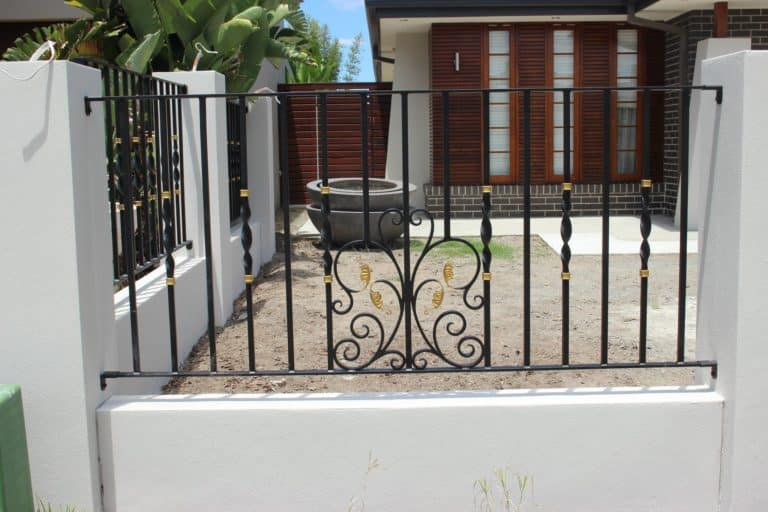
Yes! Wrought iron can be suitable for coastal homes, but only when properly treated and maintained.
Wrought iron is a defining feature of Victorian-era homes in Australia, having become a signature of luxury through terrace houses, opulent villas and grand residences known for their intricate lacework detailing. If you’re keen to add wrought iron to your coastal home in South East Queensland, the real question isn’t whether it’s a “good” or “bad” choice; it’s whether the material is properly treated for coastal conditions.
For Brisbane’s Bayside and riverside suburbs, the Gold Coast and the Sunshine Coast, salt air and humidity put constant pressure on metal fencing. This type of exposure can accelerate corrosion in any metal. But with the right preparation and ongoing care, wrought iron is one of the most durable and visually striking fencing options for coastal homes in Australia.
Coastal Environments Are Tough on Metal Fencing
Living near the ocean comes with obvious lifestyle benefits that many Queenslanders are drawn to. However, it’s less favourable for building materials.
Salt carried in the air settles on surfaces, including fences and gates. Over time, this salt attracts moisture, creating the perfect environment for corrosion to develop.
So, if you’re wondering, “Does wrought iron rust near the ocean?”, then yes, it can. Yet how quickly it rusts depends on how it’s finished and maintained.
Not All Wrought Iron Fencing Is the Same
Not all metal fencing performs the same in coastal conditions. The difference comes down to how the material is protected from oxidation.
Rust is a corrosive chemical reaction between iron, oxygen and moisture. In coastal habitats, salt accelerates this process, allowing oxidation to occur more quickly and spread beneath the surface.
This is why there’s a clear performance gap between:
- Untreated or poorly coated iron.
- Standard steel products.
- Properly finished wrought iron with protective coatings applied.
Wrought iron itself is strong, dense and less brittle than many alternatives. But without a protective barrier, it will still oxidise over time. When properly galvanised and powder-coated, however, that reaction is significantly slowed, making wrought iron a good option near salt water.
The Best Ways to Protect Wrought Iron in Coastal Areas
If you’re considering wrought iron fencing in coastal areas, you need the right protection and a basic understanding of how to prevent rust on wrought iron to ensure long-term performance.
Here’s how different treatments compare:
1. Galvanising (Best for corrosion resistance)
Galvanising coats the iron in a layer of zinc, creating a barrier against moisture and salt. It’s commonly used as a base layer in coastal environments where corrosion is a concern.
- Provides long-term protection against rust.
- Reduces the risk of corrosion forming beneath the surface.
- Well-suited to coastal conditions.
2. Powder Coating (Adds durability and finish)
Powder coating is applied to the metal – often over galvanised iron – to seal the surface and protect it from the elements. It also gives the fence a more finished, consistent look.
- Helps protect against moisture and UV exposure.
- Available in a wide range of colours and finishes.
- Improves both durability and overall appearance.
3. Paint Coatings (Basic protection)
Standard paint can offer some protection, but on its own, it’s not usually sufficient for coastal conditions.
- More prone to chipping and wear.
- Requires more frequent maintenance.
- Best used as part of a broader system (not the only layer).
Best practice for coastal homes
A combination of galvanised vs powder-coated fencing systems (ideally both together) provides the most reliable long-term protection for your property.
Wrought Iron vs Aluminium for Coastal Homes
When comparing coastal fencing materials in Australia, aluminium is often touted as the “low-maintenance” option.
Here’s how they differ in a wrought iron vs aluminium coastal comparison:
Wrought Iron
- High structural strength and impact resistance, well-suited to exposed coastal and high-wind areas.
- Solid, weight-bearing construction that holds its form over time.
- Can be custom-designed and handcrafted to suit architectural style and site conditions.
- Greater design flexibility, from simple profiles to detailed, decorative work.
- Strong street presence and an increase in long-term property value.
- Susceptible to oxidation (rust) without protective coatings.
- Requires galvanising, powder coating and ongoing maintenance, especially in coastal settings.
Aluminium
- Less structural strength compared to wrought iron, especially in high-wind or exposed coastal areas.
- Can feel lighter or less substantial, especially on larger spans or front-facing boundaries.
- Typically, more limited in design flexibility compared to custom wrought iron work.
- Naturally resistant to rust.
- Forms a protective oxide layer that slows corrosion.
- Lightweight and lower maintenance.
Cost Considerations
Aluminium is generally more affordable upfront, making it a practical option for larger areas or lower-maintenance requirements. Wrought iron typically involves a higher initial investment due to its weight, craftsmanship and finishing processes. When properly protected and maintained, however, it offers long-term durability, structural strength and a more substantial architectural presence.
The same applies to features like fencing, wrought iron gates, and entryways, where strength, finish quality, and design detail all contribute to longevity. So when considering wrought iron fencing in coastal areas, the decision comes down to what you prioritise: maintenance, long-term durability, or visual impact.
What We Recommend for Coastal Homes
For homeowners considering what type of fencing for coastal homes in South East Queensland, wrought iron makes an excellent choice when designed and finished for the environment.
What works best
- Galvanised base layer for corrosion resistance.
- High-quality powder coating for added protection.
- Proper installation to avoid water traps or exposed joints.
What to avoid
- Untreated or lightly coated iron.
- Low-cost imports with inconsistent finishes.
- Skipping protective layers to reduce upfront cost.
Cutting corners at the start often leads to significantly higher maintenance or replacement costs later.
Maintenance Expectations: The Honest Answer
Even with the best protective systems, no metal fencing near saltwater is completely maintenance-free. To prevent rust from forming on wrought iron:
- Rinse with fresh water occasionally to remove salt build-up.
- Inspect for chips or scratches in the coating.
- Touch up damaged areas early to prevent corrosion.
- Schedule recoating over time, depending on exposure.
The benefit is that with proper cleaning and upkeep, wrought iron fencing can last for decades and continue to add value to your property.
Speak to a Local Wrought Iron Specialist
At Prestige Wrought Iron, we design and manufacture custom fences, security screens, gates, and architectural features built to suit South East Queensland’s conditions, especially in coastal environments across Brisbane, the Gold Coast, and the Sunshine Coast. If you’re planning a new fence or upgrading an existing one, our team can recommend the right materials, finishes and designs to ensure durability and visual impact that adds the best value to your home. Get in touch for a consultation and explore what’s possible with custom wrought iron.